
The traditionalists always have a deceptively simple remedy for the complex social interactions that make up classrooms in state education. The latest relates to their favourite topic – knowledge. On social media, they bemoan the existence of classrooms in which “the person who knows the most, talks the least.” They run polls about the percentage of time taken up by teacher talk in lessons, implying that anything below 70% is a dereliction of a teacher’s duty. Some are much blunter, using the hashtag #justtellthem.
Continue reading “Teacher talk: ‘Just tell them’”Author: Progressive Teacher Blog
Dare the School Build a New Social Order?
In 1932, George Counts took on the leaders of the Progressive Movement of his day in a pamphlet called Dare the School Build a New Social Order? He counter-poses the individualistic aims of US progressives to the collective solutions required in economic crisis. In a vision of the ‘American dream’ that might jar for its overt nationalism, Counts resolutely places the agency of teachers and students at the heart of building a new social order in which the citizens control ‘the machine’ of industrialism.
Continue reading “Dare the School Build a New Social Order?”Saving the ‘disadvantaged’
The UK government is currently proposing to bring back the grammar school system by allowing secondary schools to select students. According to the Prime Minister, this will ensure “Britain’s education system shifts decisively to support ordinary working class families.” The Foreign Secretary claims grammar schools are “a great mobiliser and liberator” that help the “brightest children from poor homes.” And the Department for Education claimed (falsely, as it later turned out) that “white working class boys” do better at grammars.
Continue reading “Saving the ‘disadvantaged’”The double duty of progressives
Progressives seem to be on the back foot at the moment because of how the educational system measures outcomes. We have to succeed at the traditionalists’ knowledge-based targets and also at our own aims.
Continue reading “The double duty of progressives”A time of reaction (in state schools)
A study of PISA 2012 data found that “state school pupils report more traditional teaching than in private schools.” This should come as little surprise. The elite do not pay for their children to be treated like those in the local state school who are herded into large classes and taught by rote. Not for them the dependency and passivity of the children of the poor; no, they want their own children to be independent and curious. And for this, they pay private and international schools for critical thinking and inquiry-based learning. In a time of limited budgets, traditionalists not only justify this division, but also make a virtue of it.
Continue reading “A time of reaction (in state schools)”Shatsky (1922) ‘Which comes first: the children or the school?’
Extracts from A Teacher’s Experience.
(p. 203) The main question which should serve to get rid of the blurred ideas of present-day educationists is not what is the kind of school we need today, but what is a child’s life, what are its characteristic features and in what way are they of value in relation to the work of the school.
Continue reading “Shatsky (1922) ‘Which comes first: the children or the school?’”Shatsky (1918) ‘First steps towards education through work’
Extracts from A Teacher’s Experience.
(p. 176) Prejudices in the way of setting up an education through work establishment. There are two deeply rooted social prejudices which stand in the way of our attaining this ultimate goal, these are, firstly, the idea that it is essential to train children for their future life, activity or career (the prejudice regarding social education) and, secondly, the belief in the indisputable existence of a well-defined volume of knowledge strictly laid down for each stage of life…. These two parallel ideas which are mutually supporting have dealt and continue to deal great harm to children and they complicate efforts to think and analyse clearly and sensibly with regard to questions of child care. It is teachers whom these ideas impede most of all.
Continue reading “Shatsky (1918) ‘First steps towards education through work’”Stanislav Shatsky: the great experimenter
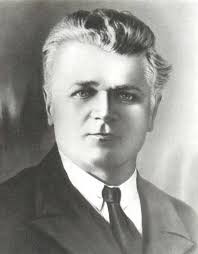
Stanislav Shatsky, a leader of progressive education in Russia, was at the centre of a state-backed attempt to introduce progressive teaching methods into classrooms. Pre-1917, Shatsky set up settlements for children of the urban working class that promoted self-government and taught skills relevant to the needs of the children’s local communities. Although he initially maintained his distance from the Bolshevik Revolution, an increasing realisation that the educational leaders of the Soviet state (particularly Krupskaya) shared his progressive philosophy led Shatsky to join Narkompros (the People’s Commissariat for Education).
Continue reading “Stanislav Shatsky: the great experimenter” progressiveteacher.blog