
The Progressive Teacher Blog celebrates pioneers of progressive education in state schools.
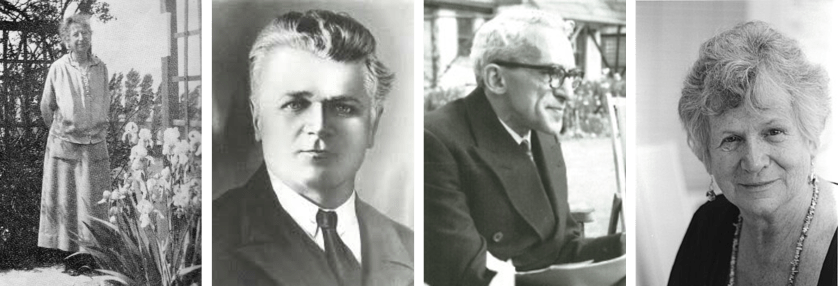
Rosa Bassett – As headteacher of the County Secondary School in Streatham (London), Bassett introduced the Dalton Laboratory Plan during the 1920s. She contributed a chapter to Helen Parkhurst’s Eduction on the Dalton Plan in which she explained the success of the experiment.
Stanislav Shatsky – Shatsky set up the First Experimental Station in the Soviet Union where he developed theories on children’s communities and self-direction. He faced personal danger as Stalin’s reaction set in. A selection of Shatsky’s writings are published in A Teacher’s Experience.
Alex Bloom – As headteacher of St George’s-in-the-East (a post-war secondary modern in the East End of London), Bloom established a school in which students and staff created their own rules for community life, curriculum and learning. Read an article on Bloom and the school here.
Deborah Meier – In 1974 Meier was a founder teacher of Central Park East Elementary School (New York City) – a small school that promoted democratic procedures and used a project-based curriculum. Details of Meier’s books, articles, and blog posts can be found here.
 progressiveteacher.blog