#leftytrad – a contradiction in terms?

In a recent blog post Adam Boxer declared himself to be a ‘lefty’ in politics and a ‘trad’ in teaching. He complains that there is a “consistent and widespread conflation of traditional education with right wing politics” – a conflation that is not warranted. Indeed, Boxer stresses that he is a traditional teacher precisely because he is left-wing:

I believe that everyone, regardless of their background, should be able to access society at any level. I believe that a highly effective way to achieve that is by transmitting the cultural goods of society; its finest discourse and mores. I also believe that our cultural and intellectual goods are the right of all citizens, whatever their backgrounds.

Boxer goes on to claim that politics and teaching methods are not related. His left-wing views, he argues, have not changed since employing progressive approaches as a lefty NQT. However, he has come to the realisation that the best way to educate for social equality – or, in Boxer’s words, “level the field and to pass on society’s goods” – is to teach as a traditionalist. The assertion that traditional teaching methods and left-wing views are compatible deserves scrutiny.

Continue reading “#leftytrad – a contradiction in terms?”
Shatsky (1922) ‘Which comes first: the children or the school?’

Extracts from A Teacher’s Experience.

(p. 203) The main question which should serve to get rid of the blurred ideas of present-day educationists is not what is the kind of school we need today, but what is a child’s life, what are its characteristic features and in what way are they of value in relation to the work of the school.

Continue reading “Shatsky (1922) ‘Which comes first: the children or the school?’”

Shatsky (1918) ‘First steps towards education through work’

Extracts from A Teacher’s Experience.

(p. 176) Prejudices in the way of setting up an education through work establishment. There are two deeply rooted social prejudices which stand in the way of our attaining this ultimate goal, these are, firstly, the idea that it is essential to train children for their future life, activity or career (the prejudice regarding social education) and, secondly, the belief in the indisputable existence of a well-defined volume of knowledge strictly laid down for each stage of life…. These two parallel ideas which are mutually supporting have dealt and continue to deal great harm to children and they complicate efforts to think and analyse clearly and sensibly with regard to questions of child care. It is teachers whom these ideas impede most of all.

Continue reading “Shatsky (1918) ‘First steps towards education through work’”

Stanislav Shatsky: the great experimenter

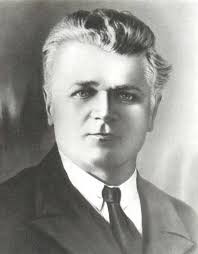
Stanislav Shatsky

Stanislav Shatsky, a leader of progressive education in Russia, was at the centre of a state-backed attempt to introduce progressive teaching methods into classrooms. Pre-1917, Shatsky set up settlements for children of the urban working class that promoted self-government and taught skills relevant to the needs of the children’s local communities. Although he initially maintained his distance from the Bolshevik Revolution, an increasing realisation that the educational leaders of the Soviet state (particularly Krupskaya) shared his progressive philosophy led Shatsky to join Narkompros (the People’s Commissariat for Education).

Continue reading “Stanislav Shatsky: the great experimenter”